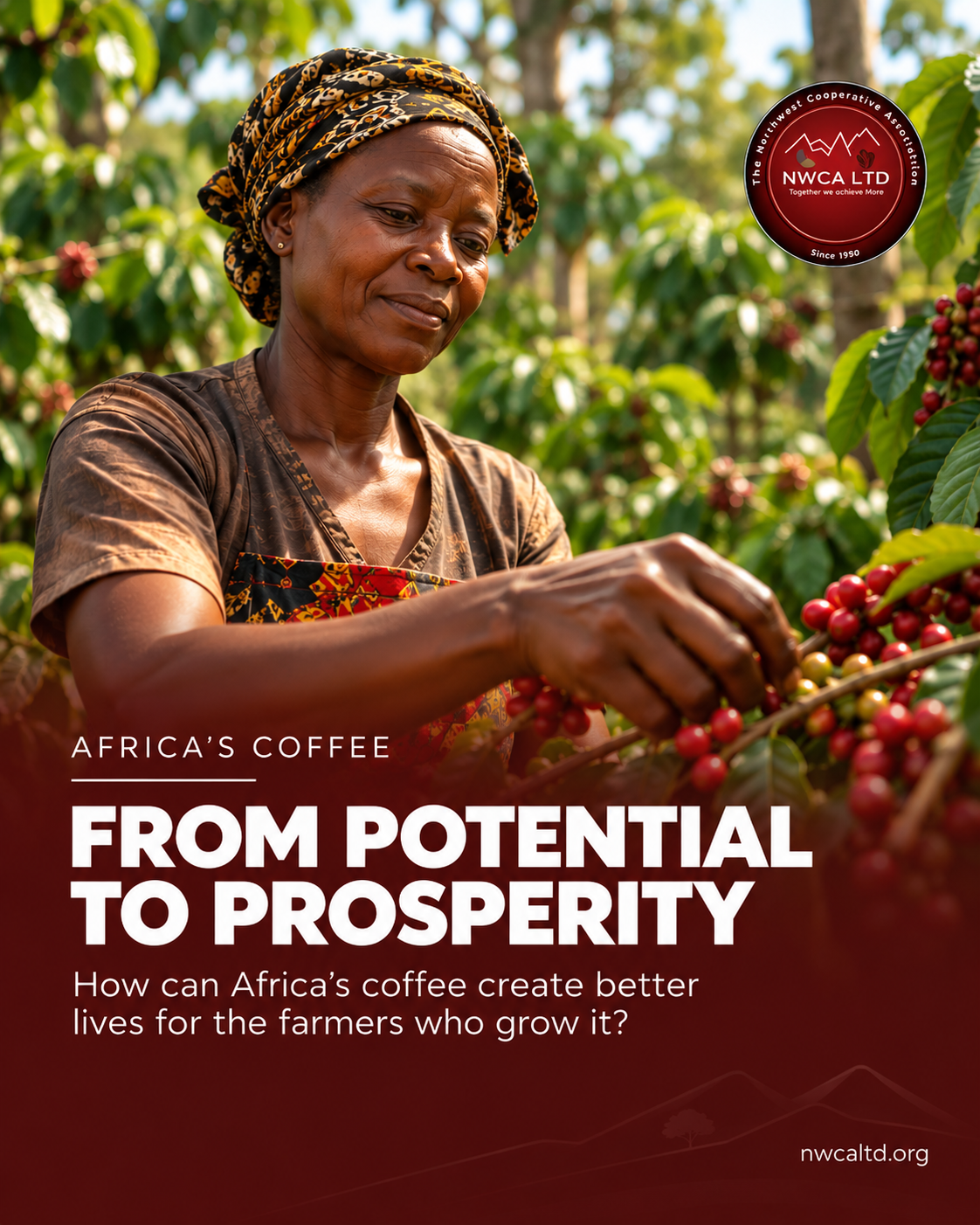
Africa's Coffee: Turning Potential into Prosperity for Farmers
Africa grows some of the world’s finest coffee. But growing more coffee is not enough. The bigger question is whether the growth of the coffee sector is also improving the lives of the farmers and communities behind it.
For the NWCA, this means helping farmers grow better coffee, strengthening cooperatives, processing more of our coffee locally and creating better opportunities to sell it at home, across Africa and around the world.
Growing more should mean earning more
Coffee farmers need good planting material, the right inputs, practical knowledge and farming methods that help them produce healthy crops year after year.
But higher production should also lead to better livelihoods.
Quality plays an important part in this. When coffee is properly harvested, handled and processed, farmers and cooperatives have a better chance of reaching markets that recognise and reward good-quality coffee.
The goal, therefore, should not simply be to grow more coffee. It should be to grow better coffee and create better opportunities for the people who produce it.
Farmers are stronger when they work together
Many African coffee farmers operate small farms. On their own, it can be difficult to access finance, farm inputs, training and larger markets.
Cooperatives can help farmers overcome some of these challenges by bringing them together.
Through a strong cooperative, farmers can access training and other services, improve the quality of their coffee, combine their produce to meet larger orders and reach buyers they may struggle to reach individually.
At NWCA, we believe a cooperative should do more than collect and sell produce. It should give farmers a stronger position and create opportunities that would be difficult for them to access alone.
More of our coffee can be processed here
A coffee bean becomes more valuable as it moves from the farm to the final cup. It can be processed, roasted, packaged, branded, distributed and sold to consumers.
When more of these activities happen within African coffee-producing countries, they can create businesses, jobs and income locally.
Our experience with Kola Coffee shows what this can look like. Coffee produced by our farming communities can go beyond being sold as a raw product. It can be processed, packaged and sold as a finished African product.
Africa can continue selling quality coffee to the rest of the world while also processing more of it at home and building strong African coffee brands.
Africa can also be a bigger market for African coffee
There is another opportunity closer to home.
Across the continent, efforts are growing to make it easier for African countries to trade with one another. The African Fine Coffees Association (AFCA) and other industry partners are also exploring ways to increase the trade of African coffee within Africa.
This creates an important opportunity for countries such as Cameroon.
We should continue asking how we can sell more Cameroonian coffee internationally. But we should also ask how we can get more of our coffee into homes, cafés, shops and businesses across Africa.
Doing this will require easier access to finance, better transport and trade systems, reliable information about markets and stronger connections between farmers, cooperatives and buyers.
Keeping the farmer at the centre
Africa already has excellent coffee, experienced farmers and communities that have grown the crop for generations.
The opportunity now is to make all the different parts work better together, from the farm where the coffee is grown to the market where it is eventually sold.
For NWCA, one question should remain at the centre of that journey: As the coffee sector grows, are the farmers who grow the coffee also doing better?
If the answer increasingly becomes yes, then Africa will not only be known for producing some of the world’s finest coffee. It will also be building a coffee sector that creates better livelihoods and stronger communities for generations to come.